
LGBTQ Therapist in Washington, DC
Virtual therapy for queer, trans, and questioning adults across Washington DC. You shouldn’t have to translate your life before anyone can care for it, so the hour goes to you instead of to a lesson.
Individual therapy for adults 18 and older. Licensed in DC and Maryland. Self-pay with superbills. Accepting new clients.
What is LGBTQ affirming therapy?
LGBTQ affirming therapy treats your sexual orientation and gender identity as healthy parts of who you are, never as the problem being treated. It’s a stance rather than a technique, and it shapes every conversation in the room, across the full range of identities that walk into it.
You’re welcome here
- Your identity won’t be judged
- You’ll still explain pronouns and chosen family
- Minority stress gets named, then set aside
- Half the hour becomes context-setting
You’re already understood
- Identity is the context, not the diagnosis
- Coming out, faith, family, and culture are familiar ground
- Minority stress is treated as a real clinical load
- The full hour goes to what you came for
Friendly means welcome. Affirming means understood.
Your identity might be the center of the work, or the backdrop.
Both are welcome. Sessions follow whatever feels loudest right now and let the rest arrive at your pace, whether that’s a clinical concern with a name or a challenge you have no language for yet.
Anxiety, depression, burnout
The heaviness that won’t lift on its own, including the version that still shows up to work every day.
Coming out, at any age
Naming who you are to yourself first, then deciding who else gets to know and when.
Gender identity
Exploring gender and gender affirming care with room to be uncertain out loud.
Minority stress
The daily toll of discrimination and being unseen in spaces that weren’t built for you.
Relationships and family
Family dynamics that feel stuck, and relationship concerns you’ve stopped raising out loud.
Self-esteem and shame
Perfectionism, harsh self-talk, and the internalized voice that learned to make you smaller.
Complex trauma and grief
Past experiences that still set the alarm off, and the losses that never got a ceremony.
Life transitions
Finding footing through change, isolation, and the seasons where your whole life reorganizes.
Every approach in the room, cognitive behavioral therapy, acceptance and commitment therapy, Internal Family Systems, dialectical behavior therapy, is evidence-based and adapted to the needs you actually walk in with. Charika is trained in each of them, and she’ll say plainly when a concern sits outside what she can provide. If the cognitive work is what you’re after, the cognitive behavioral therapy in Washington DC page goes deeper on how it runs, and her essay on affirmative therapy explains the stance every method gets delivered through.
A queer therapist, not a queer-friendly directory listing.
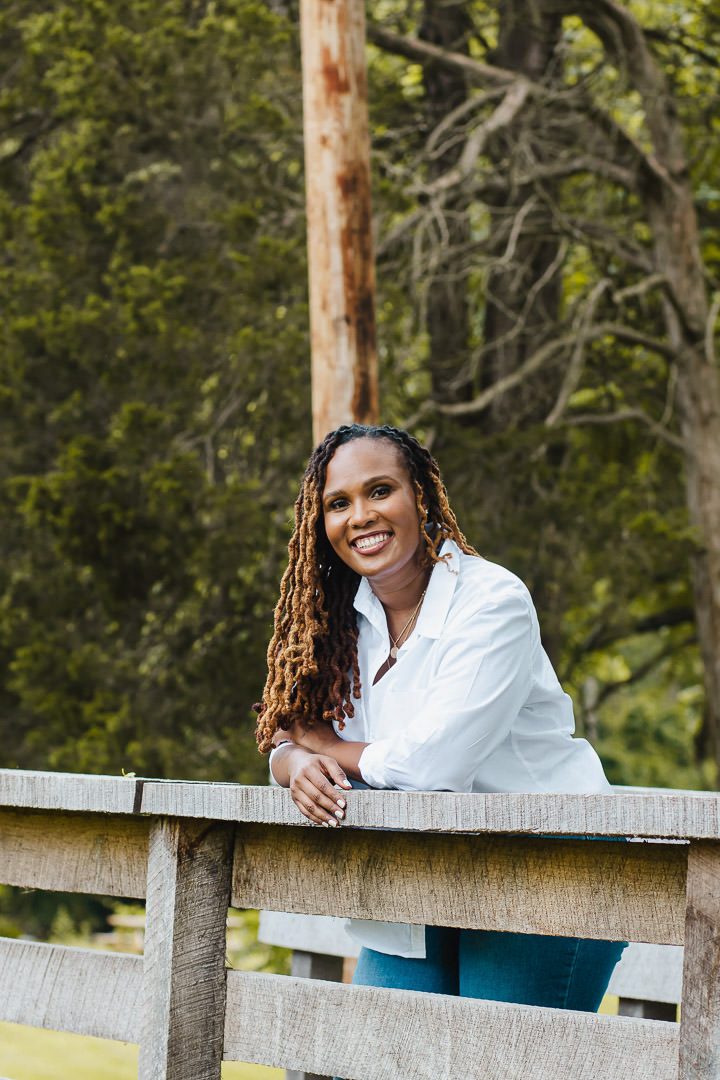
Charika White is a licensed clinical social worker, LICSW in Washington DC and LCSW-C in Maryland, and she is the whole practice. As a queer Black immigrant woman from the Caribbean, she’s moved through rooms that weren’t built for her, and built a life on her own terms anyway. That experience sits beside her clinical training in every session.
Because this is a solo practice rather than a large group, you’re not routed to whoever has an opening. You work with Charika, week after week, and the continuity is usually where the deeper change happens. She particularly enjoys sitting with queer and trans adults who are done performing for a room. More about her background lives on the holistic mental health support page.
“As a queer Black immigrant woman, I understand the power of being seen, and the exhaustion of constantly explaining yourself. My practice is a space where you don’t have to translate your experience, shrink your truth, or carry it all alone.”
Charika White, LICSW, LCSW-C
What therapy costs, and the tiers underneath it.
The initial session is $250 and follow-ups are $210. Cost keeps too many people from care, especially in our communities, so the Green Bottle Method holds a set of community tiers alongside the standard rate.
Community Care
For when budget is the biggest barrier. The most accessible rate, held open for those who need it most. Sessions start at $95.
Sustainability
The middle tier that keeps the practice steady and the doors open for everyone who walks through them.
Solidarity
For those with more room to give, sustaining accessible care for the wider LGBTQ community around you.
Insurance isn’t billed directly, because billing it often forces vulnerable communities to squeeze their care into someone else’s categories and puts a diagnosis on permanent record. A superbill is provided for possible out-of-network reimbursement. The full fee table lives on the self-pay mental health services page, and the tiers are explained in detail on the sliding scale therapy in Washington DC page.

Virtual sessions, wherever in DC you feel safe.
Sessions happen over secure video from a rowhouse in Petworth, an apartment off Columbia Heights, an office with a door that closes near Dupont, or a parked car after a shift on Capitol Hill. There’s no waiting room to sit in, and no chance of running into someone from work in the hallway. For a lot of gay men, lesbian, bisexual, transgender, and nonbinary adults in Washington DC, that privacy is the part that makes reaching out finally possible. Online therapy also solves an ordinary problem: it’s hard to find time for a commute when the workday already runs long.
Living or working across the state line? The LGBTQ therapist in Maryland page covers the same care statewide, from Silver Spring to Baltimore. If identity, race, and culture are all part of what you’re carrying, the Black female therapist in DC page is the closest neighbor to this one.
How do you find an affirming therapist who gets it?
Look past the label. Plenty of mental health professionals list themselves as affirming, and the word only means something when real understanding sits behind it. Three questions sort it out fast.
-
Have you worked with queer and trans adults, and what did that look like?
You’re listening for specifics. A therapist who’s done this work can describe it. One who has only read about the LGBTQ community will answer in adjectives.
-
Do you treat sexual orientation and gender identity as healthy?
The answer should be immediate and unqualified. Any hesitation, or any framing that treats your identity as a symptom, tells you what a year of sessions would feel like.
-
Would I have to teach you the basics before we reach the real work?
It’s the question most people are too polite to ask. Ask it anyway. Therapeutic fit predicts whether therapy works better than any single credential does.
Whether you’re searching for a gay therapist in DC, a queer therapist, or LGBTQ counseling under a name you haven’t settled on yet, the right one makes space for all of you: the queer or trans person, the professional, the family member, the whole human, without asking you to leave any part at the door. Plenty of good therapists in this city work with narrow issues, so it’s fair to ask whether yours are ones they address often.
Reaching out is often the hardest part.
If you’re reading this far, something in you is ready even if the rest of you isn’t sure yet. This form goes directly to Charika, and she usually writes back within 1 to 2 business days to set up a free 15-minute consultation.
That call is a conversation about what you need and whether this feels like the right fit. You decide from there. Prefer to talk first? Call or text 301-244-8219, or send a note through the contact a Black therapist page.
Prefer to skip the form? Book your free call directly or call or text 301-244-8219.
Start with a message
You don’t have to arrive with your identity figured out.

The first call is short and low-pressure, and either of you can say it isn’t a fit. Early sessions stay with your story: what’s been happening, what you want to feel differently, and which parts of your life feel loudest right now. Some individuals arrive with one clear personal goal, and others arrive carrying the emotional weight of navigating a decade of small daily calculations. From there the work gets collaborative, built on what you’re already good at rather than only on what hurts. Over a few months, most clients notice the same handful of shifts: boundaries that hold, a steadier sense of self, and conversations they used to dread that start to feel survivable. You only have to be curious about feeling more like yourself.
Healing here isn’t becoming someone new. It’s coming home to who you already are.
Google reviewTo find a queer, Black immigrant therapist is like finding a unicorn. Charika indeed has been that for me and I cherish the moments we have that allow me to bring all of my true self to our sessions.
Questions queer and trans clients ask most.
What is LGBTQ affirming therapy?
LGBTQ affirming therapy treats your sexual orientation and gender identity as healthy, whole parts of who you are, never as the problem being treated. It isn’t a single technique. It’s a stance that shapes every conversation, so your identity becomes the context for your care instead of the subject on trial. In practice, it means your therapist already understands how identity, family, faith, culture, and community shape mental health, and she brings that understanding into the session without being asked.
What is the difference between an LGBTQ friendly and an LGBTQ affirming therapist?
Friendly means you’re welcome. Affirming means you’re understood. A friendly therapist won’t turn you away, but you may still spend sessions explaining pronouns, chosen family, or what it costs to be the only queer person in the room at work. An affirming therapist starts from that understanding, so the hour goes to what you actually came for. For a lot of queer and trans adults in Washington DC, that difference is what finally makes therapy feel worth the money.
How do I know if a therapist is genuinely LGBTQ friendly?
A badge on a directory profile tells you almost nothing on its own. What tells you is how a therapist answers three specific questions about their experience with queer and trans adults, whether they treat orientation and gender identity as healthy, and how much you would have to explain before reaching the real work. The three questions are written out in full further up this page, along with what a good answer sounds like.
Do you work with transgender and nonbinary clients?
Yes. Transgender, nonbinary, and gender-expansive adults are welcome here. Sessions can hold gender exploration, the decisions that come with living openly, dysphoria, and the ordinary concerns that have nothing to do with gender at all. Charika uses your correct name and pronouns from the first message onward, and she won’t assume where you are in your process.
Do I have to live in Washington DC to work with you?
You need to be physically located in Washington DC or Maryland during sessions, since those are the two jurisdictions Charika is licensed in. Beyond that, you can join from home, an office with a door that closes, or anywhere private. Every session runs on secure, HIPAA-compliant video, so there’s no commute and no waiting room.
Can I start therapy if I am not out yet?
Yes. You don’t have to be out to your family, your workplace, or anyone else to begin, and you don’t need language for your identity before your first session. Plenty of people start while they’re still working it out. Therapy can be part of how you get there, not a reward for having finished.
What do you work on besides identity?
Anxiety, depression, burnout, complex trauma, grief, self-esteem, relationship concerns, and the larger life transitions that knock you sideways. Your identity might be the center of the work or the backdrop behind it. Both are normal, and you’re the one who decides which of them therapy is about right now.
How much does therapy cost, and do you take insurance?
The initial session is $250 and follow-up sessions are $210. Life Migration Therapy is self-pay, so nothing about your identity or your diagnosis lands in an insurance database. A superbill is available for possible out-of-network reimbursement, and reduced-fee spots run through the Green Bottle tiers, which start at $95. You’ll talk cost through in the free consultation before committing to anything.
Do you offer couples therapy for same-sex partners?
No. This is an individual therapy practice for adults 18 and older, so couples work sits outside its scope. If partnered work is what you need, say so during the consultation and Charika will point you toward affirming clinicians who specialize in it.
What therapy approaches do you use?
Sessions draw on cognitive behavioral therapy, acceptance and commitment therapy, Internal Family Systems, dialectical behavior therapy, trauma-focused CBT, and attachment-based work. Which of those shows up depends on you and what you’re working on, because the approach adapts to your goals instead of asking you to fit the method.
What happens in the free 15-minute consultation?
The free 15-minute consultation is a short, low-pressure conversation about what’s bringing you in and what you want to feel differently. You can ask anything about how Charika works, what sessions look like, or how the fee tiers work. You’ll leave knowing whether it fits, with no obligation to book.
Is what I share about being out kept confidential?
Yes. What you share stays between you and Charika, including your sexual orientation, your gender identity, and who in your life knows what. Being out often looks different at home than it does at work, and she won’t make assumptions on your behalf.
Come as you are, and
stay
Schedule one free 15-minute call and you’ll know soon enough whether this is your space. Come as you are, at whatever hour of the week actually works.