A Black Female Therapist in DC Who Truly Gets You
Life Migration Therapy is the private practice of Charika White, a licensed Black female therapist serving Washington DC through secure virtual sessions. Culturally affirming therapy from someone who shares your lived experience, so you can stop explaining the context and start being understood.
Individual therapy for adults 18 and older. Self-pay with superbills. Accepting new clients.
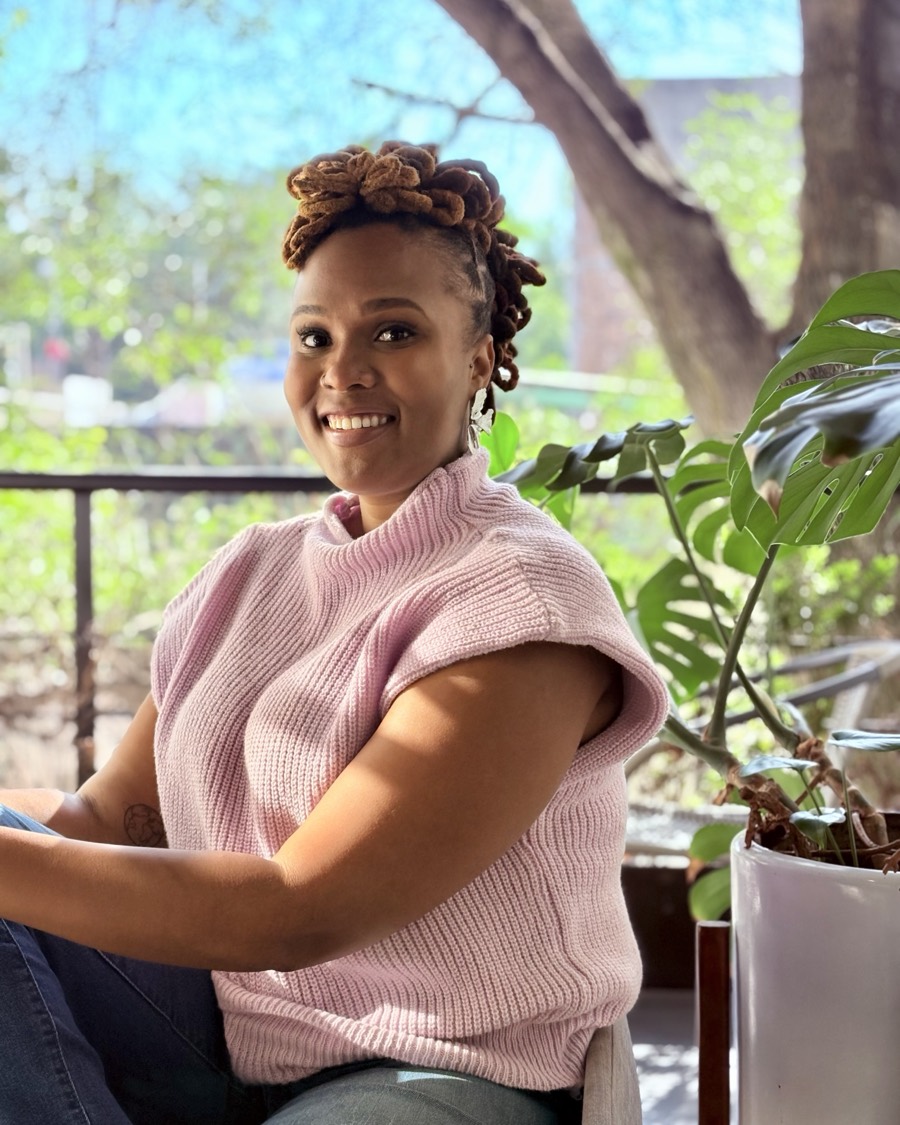

Charika White, LICSW, LCSW-C
Charika is a licensed Black female therapist serving Washington DC, and she helps adults navigate life’s challenges: trauma, anxiety, relationship stress, life transitions, and racial identity. Her work centers people the traditional mental health system tends to overlook: Black women and men, first-generation professionals, and LGBTQ+ adults who are tired of translating themselves in the therapy room. When the relationship itself is what needs the room, the practice offers Black couples therapy with a couples clinician, and Charika holds the first call.
As a trauma-responsive clinician, she creates a supportive, affirming space where you can explore personal challenges, put down what you’ve been carrying, and reconnect with your own voice. Her integrative approach blends evidence-based care with deep cultural awareness, meeting every person with compassion, curiosity, and authenticity.
“As a queer Black immigrant woman, I understand the power of being seen, and the exhaustion of constantly explaining yourself. My practice is a space where you don’t have to translate your experience, shrink your truth, or carry it all alone.”
Charika White, LICSW, LCSW-C
Want the fuller story? Learn more about Charika and the holistic approach behind the practice.
You’ve been the strong one long enough.
Maybe you’ve been feeling overwhelmed by the weight of your responsibilities for so long you’ve forgotten what safe feels like. Maybe you’ve been the dependable one at work, at home, in your relationships, and you’re quietly running on empty. Or the anxiety and career burnout simply won’t let up, no matter how well you perform on the outside.
Therapy here goes deeper than coping strategies. Sessions are grounded in deep listening, cultural humility, and approaches that honor your lived experience, whether the issues we’re working through are generational trauma, grief and loss, identity shifts, self-doubt, perfectionism, or the daily stress of systemic pressure. You get to arrive as yourself and stay that way for the whole hour, which for a lot of people feels like exhaling after holding their breath too long.
You’re not broken. You’re becoming. And if cost is what stands in the way, the sliding scale therapy in Washington DC page shows how reduced-fee care works here.

Your story is unique. Your therapy should be too.
Individual therapy
Explore your thoughts, feelings, and patterns in a supportive, affirming space. This is your time to process, unpack anxiety, rebuild self-worth, and grow emotional clarity week by week.
Trauma-responsive therapy
Trauma shows up as overthinking, people-pleasing, shutting down, or always being “on.” We work gently through those protective layers to reach the root and support real healing.
LGBTQ+ affirming therapy
As a queer Black woman, Charika knows how healing it is to talk with someone who gets it. Explore gender, sexuality, and identity, or navigate family and faith conflict, in a space where all of you is welcome. Full detail sits on the LGBTQ therapist in DC page.
First- and second-generation support
You may carry burdens your family never got to process: grief, guilt, cultural disconnection. Together we explore how migration, belonging, and identity show up in your life.
Beyond weekly therapy, the practice also provides immigration evaluations for asylum, VAWA, and hardship cases, plus adult ADHD assessment in DC when focus and executive-function questions need real answers. Her essays on decolonizing therapy and what cultural responsiveness means show the thinking underneath the practice.
Transparent rates, no surprises.
Life Migration Therapy is self-pay, with superbills for possible out-of-network reimbursement. Every fee, including ADHD and immigration evaluations, is published on the self-pay mental health services page.
Reaching out is often the hardest part.
If you’re here, something in you is ready, even if the rest of you isn’t sure yet. This form goes directly to Charika. She typically responds within 1 to 2 business days to schedule a free 15-minute consultation.
That call is a conversation about what you need and whether this feels like the right fit. You decide from there.
Prefer to skip the form? Book your free call directly or call or text 301-244-8219.
Start with a message

Virtual therapy that meets you at home.
Every session is telehealth, so your therapy fits your actual life: your apartment in Petworth after work, a quiet room in Anacostia, your parked car near Georgetown between meetings. If you live anywhere in Washington DC, from Columbia Heights to Congress Heights, this practice can see you, wherever you are on your healing journey.
Living on the Maryland side? Charika holds licenses in both jurisdictions. The African American therapist in Maryland page covers statewide care, and Baltimore readers have a dedicated Black female therapist in Baltimore page. Sessions draw on approaches like cognitive behavioral therapy in Washington DC, ACT, and IFS, always shaped to you.
bell hooksRarely, if ever, are any of us healed in isolation. Healing is an act of communion.
Why does working with a Black female therapist in DC matter?
Because healing moves faster when you’re not spending half of every session explaining context. Washington DC is full of talented clinicians, and still, so many Black women and men sit across from therapists who need the backstory on code-switching, on family obligation, on what a microaggression actually costs by Friday afternoon. With Charika, that translation work disappears. The cultural context is already understood, so therapy starts where you actually are, honoring the whole person and the community you carry with you.
- A Black woman therapist who truly listens
- Therapy for anxiety, trauma, and identity exploration
- LGBTQ+ affirming, judgment-free care
- Support for first-generation and immigrant experiences
- Mental health care that honors your whole story
If any of those brought a quiet “yes,” you’re in the right place.
Beginning therapy shouldn’t feel intimidating.
The process here is simple and welcoming, so you can feel seen and supported from day one.
-
Schedule a free consultation
A no-pressure, 15-minute call to talk through what you’re navigating and whether working together feels like the right fit. It costs nothing and commits you to nothing.
-
Start tailored sessions
Weekly or biweekly virtual sessions shaped around your experiences and identity, with affirming, trauma-responsive care every step of the way, whether you’re managing anxiety or untangling the weight of being first-generation.
-
Build lasting emotional wellness
Healing isn’t only about surviving. Together you’ll build tools for stress management, resilience, and alignment with your values, at your own pace, grounded in culturally attuned care.
How much of yourself do you set down to get through the day?
Ten questions on code-switching, scored out of 40, written by Charika. Your result lands in your inbox with what it tends to mean.
Where should Charika send your results?
Ten questions, about three minutes. Your score and what it’s telling you lands in your inbox, along with a few questions worth sitting with afterward.
Question 1 of 10
How often does this feel true?
I change how I speak, my accent, slang, tone, or level of formality, depending on who I’m with.
How often does this feel true?
I hold back parts of my personality or humor because I’m unsure how they’ll be received.
How often does this feel true?
I feel like I have to perform competence, friendliness, or likability to be taken seriously.
There are no right or wrong answers here.
Nothing you check makes you difficult, dramatic, or ungrateful. You’re describing what it costs you to move through certain rooms.
How often does this feel true?
I edit my opinions, reactions, or emotions in professional or academic spaces.
How often does this feel true?
I feel drained after spending time in spaces where I don’t feel culturally at home.
How often does this feel true?
I’ve been told I “seem different” depending on who I’m around.
Code-switching can be a rational response to environments where being fully yourself has not always felt safe.
It’s something many of us learned early, often for protection. Noticing what it costs isn’t the same as deciding it was wrong to learn.
How often does this feel true?
I avoid sharing parts of my culture, family, or background because I don’t want to explain or defend them.
How often does this feel true?
I feel like I have to prove I belong, even in spaces I’ve earned my way into.
How often does this feel true?
I soften or downplay my emotions, especially anger or frustration, to avoid being stereotyped.
How often does this feel true?
I notice myself relaxing or exhaling once I’m back around “my people.”
Answer for how it usually feels, not how you think it should feel.
The version of this that helps is the honest one, and nobody sees these answers except you.
The longer reading is on its way to your inbox, with what this range tends to mean and a few questions to sit with. If it hasn’t arrived in a few minutes, check your spam folder.
Your score isn’t a diagnosis, and there’s no good or bad number here.
Choose an answer for each one to continue.
Free, not a diagnosis, and nobody sees your answers except you.
Questions Black women and men in DC ask most.
Everything people want to know before starting therapy here: cost, insurance, cultural fit, and what the first call feels like. If your question isn’t answered, contact a Black therapist directly and ask.
Book a Free 15-Min CallHow do I find a Black female therapist in DC?
Finding one usually starts with directories like Therapy for Black Girls, Inclusive Therapists, and Clinicians of Color, which list Black female therapists and African American female therapists across Washington DC by identity and specialty. The other route is reaching out to a private practice directly. At Life Migration Therapy you work with Charika White, LICSW, a licensed Black female therapist, from the first free consultation call onward, with no matching algorithm deciding who you see.
Can I request a Black therapist specifically?
Yes, and wanting one is a clinically valid preference, not a bias. Research on the therapeutic alliance shows the relationship itself drives outcomes, and for many Black clients a shared cultural context is what makes that relationship feel safe enough to do real work. Here you don’t have to request it: Charika is a Black woman, and the practice was built around care that understands your lived experience firsthand. The best therapist for you is the one you never have to explain yourself to.
What makes Life Migration Therapy different from other therapy services in DC?
The practice is led by Charika White, LICSW, LCSW-C, a queer Black immigrant woman from the Caribbean and a licensed clinical social worker. Sessions blend evidence-based approaches like CBT, acceptance and commitment therapy, and Internal Family Systems with cultural humility and racial trauma awareness. That combination, clinical rigor plus lived experience, centers Black mental health needs, immigrant stress, and intersectional identity in a way generic counseling offices often overlook.
Do you offer trauma-responsive counseling for anxiety and depression?
Yes. Charika provides trauma therapy for high-functioning anxiety, depression, and post-traumatic stress disorder (PTSD) rooted in race-based stress, intergenerational trauma, or immigration transitions. Treatment pairs mindfulness and grounding skills you can use right away with deeper work on the patterns underneath, so relief and long-term resilience build together.
Are online therapy sessions available for Washington DC residents?
Yes. Charika holds the LICSW, the independent clinical license for Washington DC, and every session is secure, HIPAA-compliant telehealth. Whether you live in Georgetown, Petworth, Anacostia, Columbia Heights, or anywhere else in the District, you meet from your own space with no commute. She is also licensed in Maryland as an LCSW-C, so your care continues even if you move across the line.
I’m a first-generation immigrant. Can therapy address cultural and family expectations?
This is one of the practice’s deepest specialties. Sessions make room for acculturation stress, family role strain, and the pressure many first-generation adults and adult children of immigrants carry: succeed, translate, hold everyone together. You don’t have to choose between honoring your heritage and building your own life. Therapy helps you hold both.
Do you accept insurance, Medicaid, or offer a sliding scale?
Life Migration Therapy is self-pay and does not bill insurance or Medicaid, which keeps your care confidential and clinician-led: no diagnosis is required for coverage, and nothing enters an insurance database. A superbill is available for possible out-of-network reimbursement where your plan allows. For reduced-fee care, the Green Bottle sliding scale offers sessions from $95 through supervised associate clinicians.
How does therapy help with racial trauma and microaggressions at work?
We name what happened as real, then work with the anger, numbness, or hypervigilance it left behind. Sessions combine somatic grounding, cognitive reframing, and boundary work tailored to Black professionals navigating DC’s corporate, academic, government, and healthcare spaces. The goal isn’t helping you tolerate harm quietly. It’s protecting your peace while you decide what you want to do next.
What if I need queer-affirming or LGBTQIA+ counseling?
Charika is a queer therapist herself and practices affirmative therapy with minority-stress awareness woven through every session. Whether you’re exploring identity, navigating family or faith-based conflict, or simply want care where all of you is welcome, you won’t have to educate your therapist here. The LGBTQ affirming therapy page covers this work in more depth.
How many sessions will I need?
Charika will not put a number on your healing, because there is not an honest one to give. Some clients work through a focused goal and stop there. Others choose ongoing weekly or biweekly therapy to sustain their wellbeing through demanding seasons. You review it together as you go, so therapy keeps serving your changing needs instead of running on autopilot.
How do I start therapy with a Black therapist in Washington DC?
Book a free 15-minute consultation call. You’ll talk through what you’re navigating, what you’re looking for, and whether working together feels right. There’s no pressure and no commitment attached to that first conversation. Charika is accepting clients across DC and Maryland, and if it fits, you’ll schedule your first session and begin.
You deserve a therapist who already understands.
One free 15-minute call is all it takes to find out if this is your space. Come exactly as you are.