LGBTQ Therapist in Maryland
Affirming therapy for queer, trans, and questioning adults anywhere in the state. You’ve probably spent enough hours teaching someone your life before they could care for it. Here, the hour starts with you.
Individual therapy for adults 18 and older. Licensed in Maryland and Washington DC. Self-pay with superbills. Accepting new clients.
What makes therapy LGBTQ affirming?
Affirming therapy treats your sexual orientation and gender identity as healthy parts of who you are, never as the problem being treated. It isn’t tolerance with better manners. It changes what happens in the room.
- Your identity is context, not diagnosis. The focus stays on anxiety, depression, trauma, or whatever brought you in, understood against the life you actually live.
- Minority stress counts as clinical. The vigilance, the microaggressions, the erasure. All of it adds up, and it gets treated as a real load.
- No education required from you. Pronouns, chosen family, and the shape of coming out are already familiar ground.
- Your pace sets the schedule. You can explore gender affirming care, or leave it alone entirely, without a deadline attached.
A therapist can list “LGBTQ friendly” on a directory profile and mean it sincerely while still leaving you to do the explaining. Affirming care is the version where that work is already done. If you want the longer comparison, the LGBTQ therapist in Washington DC page breaks the two apart side by side.

Shared understanding, not cultural competence on a certificate.
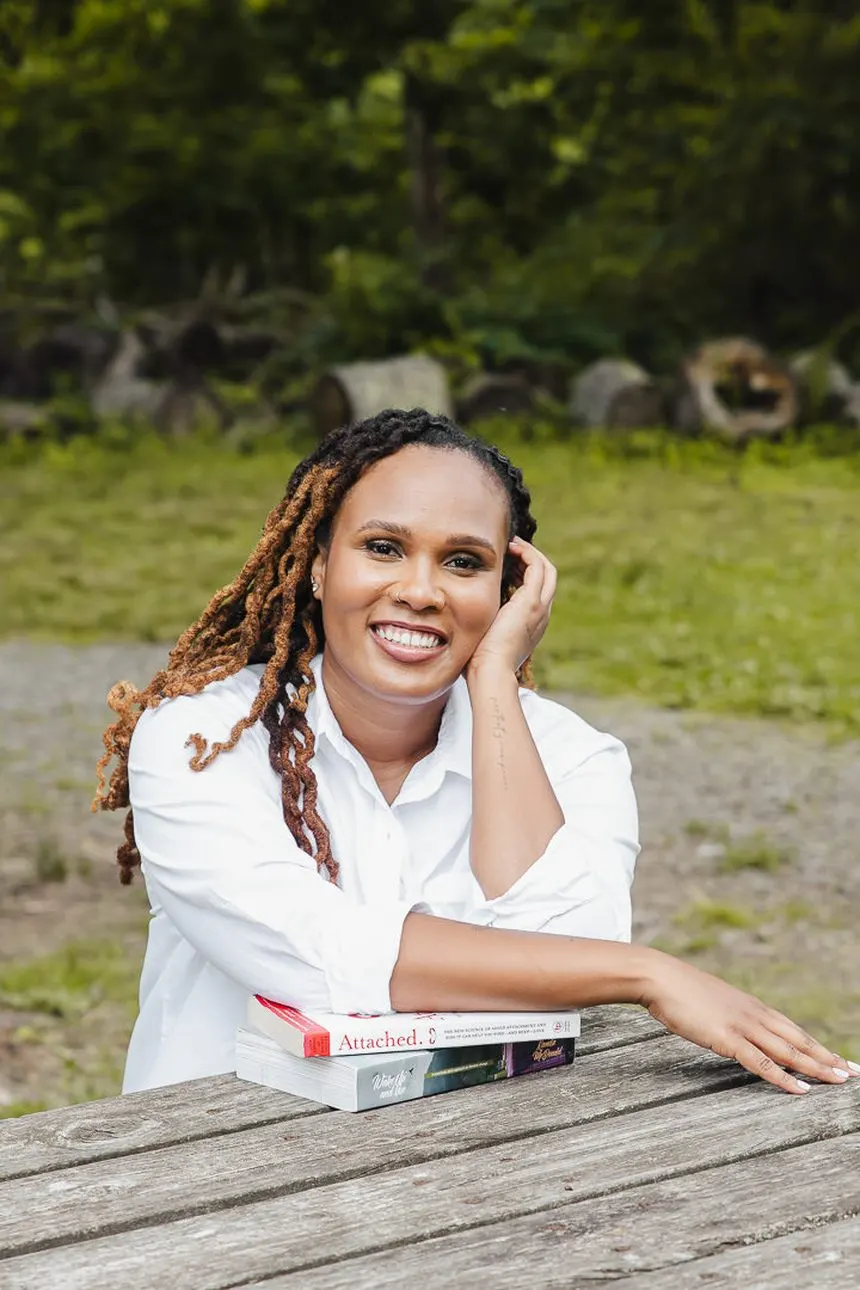
Charika White is a licensed clinical social worker, LCSW-C in Maryland and LICSW in Washington DC, and she’s queer, Black, Caribbean, and an immigrant. She has moved through the same intersections a lot of her clients live at, including the version where the world wants to take one identity at a time and never the whole person.
That matters in ordinary moments more than dramatic ones. You don’t explain why a comment stung. You don’t justify why representation matters or why being the only one in the room is exhausting. You don’t code-switch in the one hour a week where you should be able to breathe. Her full background lives on the holistic mental health support page, and her essay on affirmative therapy explains what that stance means once you’re in the room.
“As a queer Black immigrant woman, I understand the power of being seen, and the exhaustion of constantly explaining yourself. My practice is a space where you don’t have to translate your experience, shrink your truth, or carry it all alone.”
Charika White, LICSW, LCSW-C
What clients across Maryland bring in.
Whether you identify as gay, lesbian, bisexual, queer, transgender, nonbinary, intersex, or you’re still finding language for it, you’re welcome. These are the concerns people across the LGBTQIA+ community bring in most, and arriving unsure is normal.
Coming out and identity
Coming out to yourself, your family, or the world brings up fear, grief, relief, and joy at once. There’s room for all of it, in whatever order it arrives.
Family acceptance
Family dynamics get heavy when your identity isn’t fully accepted. We work on boundaries, resilience, and deciding which relationships get your energy.
Minority stress
Constant vigilance and daily erasure take a measurable toll. Sessions build tools that protect your mental health without asking you to shrink.
Gender identity and transition
Dysphoria, gender exploration, and the practical decisions that come with living openly, supported at whatever speed is actually yours.
Anxiety, depression, trauma
Rejection and discrimination leave real marks. We treat the anxiety, the low mood, and the trauma with evidence-based care, not reassurance alone.
Life transitions
New job, new city, new relationship structure, new sense of self. The seasons where everything reorganizes deserve support while they happen.
The LGBTQ community holds many stories, and LGBTQ individuals arrive with unique needs: one person is non-binary and tired of being misgendered at work, another is sorting out relationship issues, another carries mental health challenges with a long history. The work is trauma informed, so you set the pace, and that pacing is how affirming therapists earn trust over time.
You get to bring the whole self to the hour you paid for.
Reaching out is often the hardest part.
If you’re here, something in you is ready even if the rest of you isn’t sure yet. This form goes directly to Charika, and she usually writes back within 1 to 2 business days to set up a free 15-minute consultation.
Prefer to talk first? Call or text 301-244-8219, or use the contact a Black therapist page.


Start with a message
What it costs, and what keeps it reachable.
The initial session is $250 and follow-ups are $210. Insurance isn’t billed directly here, because billing it means a diagnosis on permanent record and a stranger deciding how much care you get. A superbill is provided so you can pursue out-of-network reimbursement from your own plan. When cost is the barrier, reduced-fee sessions run through the Green Bottle tiers starting at $95, and nobody has to prove hardship to choose one.
Your wellness shouldn’t hinge on how well you can navigate a benefits portal, so the numbers are published rather than quoted on request. The full fee table, superbill details, and reimbursement support live on the self-pay mental health services page. The tiers themselves are explained on the sliding scale therapy in Washington DC page, and they serve Maryland clients too.
Cost should never be the reason you stay unsupported.
Client testimonialCharika has completely changed my life! I came in not knowing who I was and left feeling the most certain about my identity and what I wanted for my life.
Affirming therapy across
Maryland

Affirming care is easy to find inside the Beltway and much harder an hour outside it. Telehealth closes that gap: clients join from Silver Spring, Takoma Park, Baltimore, Rockville, Bethesda, Gaithersburg, and Frederick, along with the smaller communities across Prince George’s, Montgomery, Howard, and Anne Arundel counties. Individuals in the parts of MD where the nearest queer-friendly practice is an hour away get the same supportive, safe hour as anyone in Montgomery County. If you’re located in Maryland, this practice can see you.
- Silver Spring
- Takoma Park
- Baltimore
- Rockville
- Bethesda
- Gaithersburg
- Frederick
- Prince George’s County
- Montgomery County
- Howard County
- Anne Arundel County
Just over the line in the District? The LGBTQ therapist in Washington DC page covers the same care there. Looking for the race and culture side of this work, the African American therapist in Maryland page is its closest neighbor, and Baltimore residents can start with the Black female therapist in Baltimore page.
Integrative, evidence-based, and adapted to you.
There’s no single method applied to everyone. Charika pulls from several evidence-based approaches depending on what you’re working on, and she’ll tell you which one she’s using and why. Her clinical training sits behind each of them, and you help build the treatment plan.
- Cognitive behavioral therapy (CBT)
- For depression, anxiety, and the thought patterns that keep looping. Explained in full on the cognitive behavioral therapy in Washington DC page.
- Acceptance and commitment therapy (ACT)
- For making room for difficult feelings while still moving toward what you value.
- Internal Family Systems (IFS)
- For the parts of you that protect, criticize, or hide, and what each of them is trying to do.
- Dialectical behavior therapy (DBT)
- For emotion regulation, distress tolerance, and interpersonal skills under pressure.
- Trauma-focused CBT
- For trauma and post-traumatic stress, including trauma rooted in rejection or discrimination.
When weekly sessions aren’t the right container, extended individual therapy intensives in Maryland and DC give you concentrated time instead of stretching the work across months. Online EMDR in Maryland is with Jamila Kani, LICSW, another clinician at the practice.

Questions about LGBTQ therapy in Maryland.
What makes a therapy practice LGBTQ affirming?
Affirming means your identity is treated as a healthy part of who you are rather than something to be fixed or quietly tolerated. In practice it shows up in small, constant ways: your name and pronouns used without a reminder, family and faith conflict understood in context, and minority stress treated as a real clinical load instead of background noise. Charika is a queer Black immigrant woman herself, so you spend far less of the hour explaining and far more of it working.
Do you work with transgender and nonbinary clients in Maryland?
Yes. Transgender, nonbinary, genderqueer, and gender-expansive adults across Maryland are welcome. Sessions can hold gender exploration, dysphoria, the decisions that come with living openly, and everything in your life that has nothing to do with gender at all. Charika uses your correct name and pronouns from your first message, and she won’t assume where you are in your process.
Where in Maryland do you see clients?
Everywhere in the state, because every session is secure telehealth. Clients join from Silver Spring, Takoma Park, Baltimore, Rockville, Bethesda, Gaithersburg, Frederick, and the smaller communities across Prince George’s, Montgomery, Howard, and Anne Arundel counties. You need to be physically located in Maryland or Washington DC during the session, since those are the two jurisdictions Charika is licensed in.
Is online therapy as effective as meeting in person?
For most adults seeking talk therapy, yes. Plenty of clients find video easier: the drive across the Beltway disappears, so does the waiting room, and the odds of running into a coworker on the way in drop to zero. Being at home also tends to make the first few sessions less guarded, which matters when the work involves things you’ve never said out loud before.
What issues do you work on with LGBTQ clients?
Coming out and identity exploration, family acceptance, gender identity and transition support, minority stress, anxiety, depression, PTSD, complex trauma, grief including the loss of chosen family, self esteem, workplace discrimination, and the larger life transitions that follow all of it. Queer and trans people face higher rates of several mental health disorders because of what the world does to them, not because of who they are, and psychotherapy here treats it that way. Your identity may be central to the work or one part of the picture.
How do I know if you are the right therapist for me?
You’ll get a strong sense of it in the free consultation. Notice whether you feel heard, whether the pace feels right, and whether you can imagine saying the hard thing out loud. Therapeutic fit predicts outcomes better than any single credential, so if it isn’t a match, Charika will say so and point you toward Maryland therapists who might fit better.
Do you accept insurance?
No. Life Migration Therapy is a self-pay practice, which keeps your care clinician-led and keeps a diagnosis out of an insurance database. A superbill is provided so you can seek out-of-network reimbursement from your plan, and reduced-fee sessions run through the Green Bottle tiers starting at $95. The initial session is $250 and follow-ups are $210.
Do you offer couples therapy?
Not right now. Life Migration Therapy offers individual therapy for adults, and couples therapy is not available at the moment. Relationship concerns come up constantly in individual work with Charika, and they’re welcome there.
What therapy approaches do you use?
Cognitive behavioral therapy, acceptance and commitment therapy, Internal Family Systems, dialectical behavior therapy, trauma-focused CBT, and attachment-based work. The mix is integrative rather than one-size-fits-all, and which approaches show up depends on what you’re working on and what actually helps you.
What if I am still questioning my identity?
Still questioning your identity is a completely valid place to begin. You don’t need a label, a timeline, or an answer before your first session. Therapy can be where you try ideas on, ask questions you can’t ask elsewhere, and take as long as you need without anyone pushing you toward a conclusion.
How long does therapy usually take?
How long therapy takes depends on what you’re working on, and Charika would rather say that plainly than put a timeline on your healing. Some clients come to move through one transition and finish there, and others stay longer because ongoing support is worth having while life keeps changing. Progress gets reviewed together as you go so the work stays aligned with what you actually need.
What happens in the free 15-minute consultation?
A short conversation about what’s bringing you in, what you want to feel differently, and how sessions work. You can ask anything about approach, fees, or scheduling. There’s no obligation to book afterward, and you’ll know either way.
You’re not the only one out here.
Getting started takes one free 15-minute call, and the calendar is open now. Come exactly as you are.