Workplace Wellness Consultant for DC and Maryland
Your team deserves more than surface-level wellness initiatives. Employee wellbeing consulting for nonprofits, companies and schools across Washington DC and Maryland, working the causes of burnout, turnover and disconnection rather than the symptoms.
Wellbeing assessments, staff training, retention strategy, and manager coaching for nonprofits, companies, and schools. Virtual or in person, tailored to your organization.
You’ve tried the standard approach.
Yoga classes, a mindfulness app, an employee assistance program. Turnover stays high, staff still call out, and your HR team keeps reading the same themes in every exit interview. Across the nonprofits, schools and clinical teams this work is built for, that pattern is structural rather than a personal failing in any one group.
High turnover
You’re constantly training new staff, losing institutional knowledge, and watching good people leave. Exit interviews name burnout, lack of support, or feeling undervalued, and the pattern repeats.
Workplace culture concerns
Tension between departments, communication breaking down, or a sense that leadership doesn’t see what frontline staff live daily. People stop believing their voice changes anything.
Chronic employee burnout
Your team is exhausted. Sick days climb, productivity slides, and the spark that brought people to this work is fading. Fixes that helped for a month never reached the deeper issue.
Retention in a competitive market
You’re up against organizations paying more, and you know compensation isn’t the whole story. Your team needs to feel supported and equipped to do meaningful work without wrecking their own health.
A mindfulness app cannot reach a caseload. These are symptoms of systems that weren’t built to sustain the humans doing the work.
Five places an engagement usually starts.
Every organization arrives somewhere different, so engagements are assembled to fit, and each one is built toward measurable outcomes you agreed to up front.

- Organizational wellbeing assessment
- A full evaluation of workplace culture, policies, and systems to identify what is affecting employee wellbeing and retention. Confidential staff input, leadership interviews, and analysis of organizational data produce insights into the current challenges and where the openings are. The process is designed so leaders hear what staff won’t say in a room with their manager.
- Staff training and skill-building workshops
- From boundary-setting in helping professions to stress management and working with vicarious stress, targeted education built around the challenges your team faces. Interactive sessions grounded in professional clinical expertise, not a generic slide deck delivered at a room.
- Retention strategy consultation
- Employee retention takes more than a competitive salary. This work identifies what makes employees stay, what pushes them out, and how to help employees build a career here instead of an exit plan. Usually the reason isn’t the one leadership expected.
- Sustainable wellness strategy
- Wellness strategies that go past surface-level perks. Together you’ll develop policies and practices covering workload distribution, real work-life balance, and a work environment where asking for support is normal, not career-limiting. The view is holistic on purpose, because workload and culture move together.
- Leadership coaching for managers
- Your managers set the tone, and most of them were promoted into the role without preparation for its emotional weight. This equips leaders to recognize burnout early, hold difficult conversations well, and build psychologically safe teams where staff raise concerns without fear of consequences.
Culture assessments, change management, and leadership development at the whole-organization level live on the organizational culture consultant page, and the framework underneath all of it is explained on the psychological safety consulting page.
Before hiring a corporate wellness consultant, name in one sentence what you want corporate wellness consulting to change for your team. This approach to workplace wellness treats employee health and health promotion as long-term work inside the company culture, with health and wellness perks or corporate wellness programs as one piece of it. One-on-one conversations with staff and leaders show where employee well-being is being lost and where health and well-being can be protected.
Request a custom consultation quote.
Tell Charika what your organization is dealing with, how many people it affects, and what you’ve already tried. She usually replies within 1 to 2 business days to set up an initial conversation.
That conversation covers your challenges, your size, and your goals, and produces a proposal that fits your budget and timeline. No obligation attached. Prefer to talk first? Call or text 301-244-8219, or email info@lifemigrationtherapy.com.


Start the conversation
Clinical depth, and someone who has sat in both chairs.
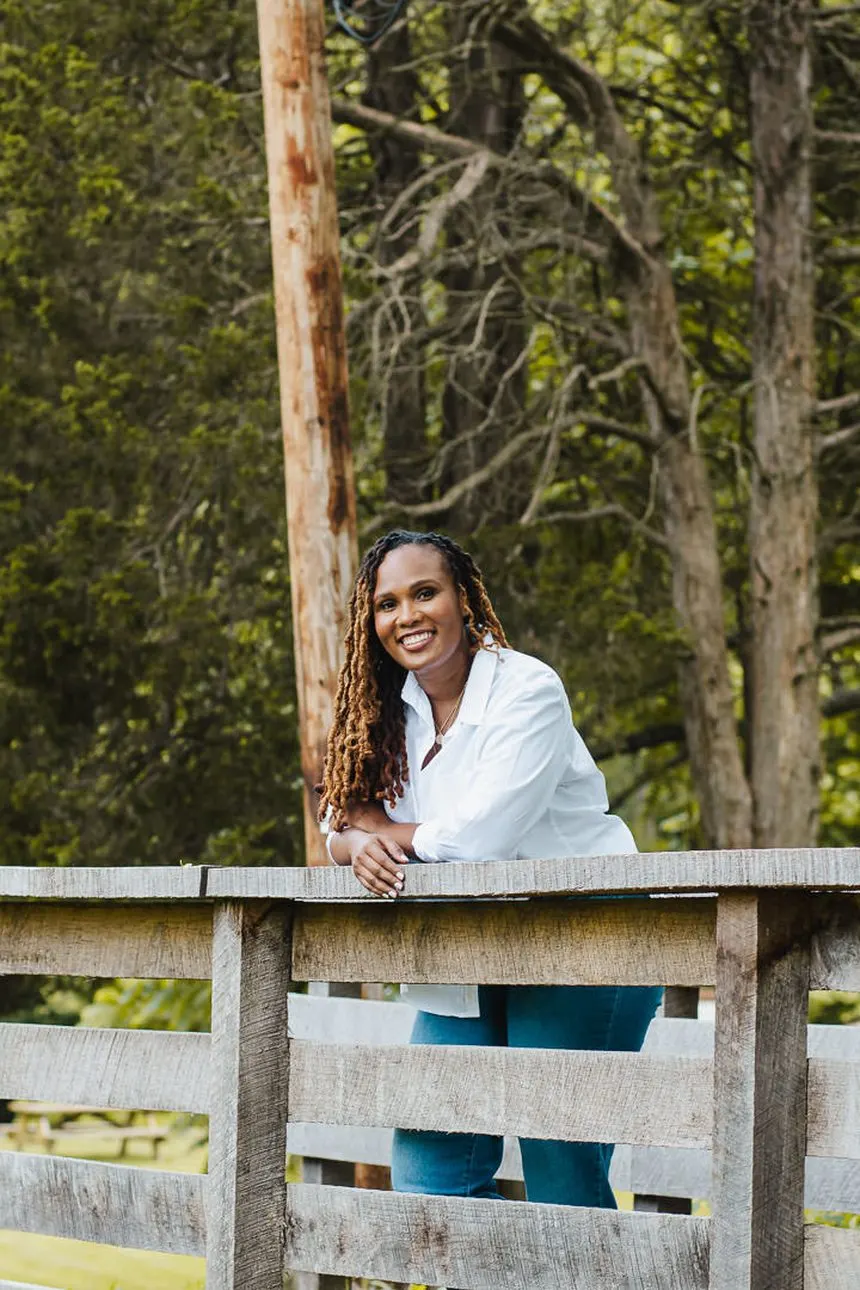
Charika White is a licensed clinical social worker with an MBA, which means workplace problems get read through a mental health lens and reported back in business terms. She has worked in community behavioral health settings and hospital environments, as the employee carrying an unsustainable caseload and as the manager trying to advocate for a team inside real constraints.
That dual perspective is what lets Charika honor what frontline staff experience without dismissing the constraints leadership is actually working inside, which is usually where these engagements either open up or stall. The clinical research training is what surfaces where systems create stress, where communication patterns keep burnout circulating, and where a small, effective change produces a disproportionate impact on performance.
Organizations serving communities under pressure carry extra weight. Staff may be doing frontline work with people in crisis while navigating their own experience of the same systems. Standard wellness programs tend to miss that entirely, and it is usually the first thing an assessment here surfaces.
Whoever you hire for this work, hold the shortlist to a few tests: lived experience inside the kinds of systems you run, clinical grounding in how stress behaves, a focus on structural change with measurable outcomes, and a bias toward building your team’s own capacity so you need less consulting over time, since dependence serves the consultant more than the organization.

Three sectors, one shared problem.

Nonprofits in Washington DC
Critical work, limited resources. Your team believes in the mission, and belief doesn’t prevent burnout. You need strategies that respect a real budget and stay inside the language your Washington DC funders expect to read.
Companies with wellbeing programs that aren’t landing
Your employee wellness initiatives reach some of the workforce and miss the rest. Moving past one-size-fits-all means building programs around the people your company employs, then measuring whether employee engagement changed at all. Most clients arrive holding a survey nobody knew how to act on.
Educational institutions
Faculty and staff are stretched thin, morale is low, and retention is becoming a real budget line. Academic environments carry pressures a generic program was never designed for, so the work starts by naming them.
Fellow clinicianI had the privilege of collaborating with Charika White during the crisis response following Hurricane Melissa while supporting guests and staff at Sandals Resort. As a fellow clinician, I witnessed firsthand the depth of her skill, compassion, and cultural humility in action. Charika is an exceptio.

Compare it to what turnover already costs.
Workplace wellness consulting is an investment in whether your organization can keep going. Address the causes of turnover and burnout and you’ll reduce recruitment costs, keep institutional knowledge in the building, protect productivity, and build a better capacity to deliver on the mission you exist for.
Every organization has a unique starting point, which is why engagements are customized and not priced off a menu. The initial consultation covers your specific challenges, your size, and your goals, and the proposal that follows is built for your budget and timeline, with a strategic sequence for what to tackle first so you can manage it alongside everything else you are trying to achieve. You get access to the same thinking whether the engagement is one workshop or a year.
Most organizations find the number sits well below the ongoing expense of replacing people, rebuilding lost knowledge, and running at reduced capacity while roles sit open.
What keeps the investment paying off is accountability. Engagements build it in from the start: specific goals with timelines and a review cadence, climate surveys that end in a report-back on what changed, retention tracked closely enough to reveal patterns, wellbeing reflected in how leaders are evaluated, and real budget and staff time allocated so the work survives its first busy quarter. Wellbeing initiatives without those structures tend to become optional, and optional is how they end.
What should a wellness engagement cost and cover?
What does a workplace wellness consultant do?
Workplace wellness consultants look at the conditions producing burnout and turnover, then help an organization change them. That means assessing culture, policies, workload, and communication patterns, designing wellbeing programs that fit the workforce you have, training managers, and building a retention strategy. It’s organizational work rather than a benefit you bolt on.
How is this different from a corporate wellness program?
Most corporate wellness consultants sell programs that act on individuals: a gym benefit, an app, a lunchtime webinar. Useful, and none of it touches a caseload that’s too heavy or a manager nobody can be honest with. This work starts with the conditions instead, which is usually why the wellness spend wasn’t moving the numbers.
How long does workplace wellness consulting take?
How long workplace wellness consulting takes varies. Some organizations book a single assessment and strategy session, others prefer ongoing consultation across several months. Most see meaningful shifts within 3 to 6 months when they implement what comes out of the assessment. The initial conversation is where you’ll work out which shape fits.
Can this work fit within federal funding restrictions?
Yes, and it’s one of the main reasons nonprofits get in touch. The psychological safety framework addresses the same core needs, belonging, fairness, representation, and voice, and it keeps the language operational; that framing is what lets organizations receiving federal or state funding invest in real change without putting grants at risk.
What is included in an organizational assessment?
Typically confidential staff surveys or interviews, leadership conversations, a review of relevant policies and practices, analysis of turnover and retention data, and observation of team dynamics where appropriate. You receive a detailed report with specific findings and recommendations built for your organization, never a template.
Do you work with organizations outside the nonprofit sector?
Yes. Much of the work centers nonprofits serving communities under pressure, and companies and educational institutions bring the same retention and burnout problems from a different direction. The approach holds across sectors, because the conditions that exhaust people don’t vary as much as the org charts do.
How do you measure success?
Goals get set at the start: reducing turnover by a specific amount, improving staff satisfaction scores, cutting sick-day usage, or strengthening a named part of the culture. Both quantitative metrics and qualitative feedback get tracked, because a number moving while nobody reports feeling any different isn’t success.
What does workplace wellness consulting cost?
Engagements are customized, so pricing depends on organization size, scope, and structure. The initial consultation covers your challenges, your size, and your goals, and produces a proposal built for your budget and timeline. Most organizations find the cost sits well below what sustained turnover is already costing them, and that comparison is worth running before you decide.
Do you offer fitness, nutrition, or biometric screening programs?
No. Those belong to a different kind of vendor and there are good ones. This practice works on the organizational and psychological side: burnout, workload, culture, manager capability, and retention. If a physical-health program is what you’re shopping for, say so early and you won’t waste a call.
Is this therapy for our employees?
No. Consulting is organizational work, not clinical care, and no employee becomes a therapy client through an engagement. Where individuals need their own support, that runs separately through the therapy side of the practice or through a referral.
High turnover isn’t inevitable.
Schedule a free consultation to talk through what your team is carrying and whether this approach fits. An honest conversation about what would change it.