Breaking Generational Trauma in an Immigrant Family

As immigrants, a lot of us carry more than memories of home.
We carry the rules our parents survived by. The vigilance that never quite switches off. The specific guilt that comes with resting. The way an ordinary disagreement can feel like the floor is about to disappear. None of it was explained to us, and most of it was never named, which is exactly what makes it feel like personality rather than inheritance.
Breaking generational trauma is genuinely possible, and it’s slower and more particular than the phrase suggests. It also asks something specific of people whose parents sacrificed a great deal, which is why so many of us stall at the first step.
What is intergenerational trauma?
Intergenerational trauma, sometimes called transgenerational or generational trauma, is what happens when the effects of trauma pass from one generation to the next. The person carrying the symptoms never experienced the original event. After a traumatic event, or a run of traumatic experiences nobody had room to process, unresolved trauma gets passed down from one parent to a child through family dynamics, coping mechanisms, and the way family members handle emotional regulation. Post-traumatic stress disorder is a diagnosis one person can carry; traumatic stress inside a family can be passed down through generations without anyone being diagnosed, as habits, unspoken rules, and physical health patterns like poor sleep. Healing generational trauma is how that cycle of trauma stops, for future generations as much as for you.
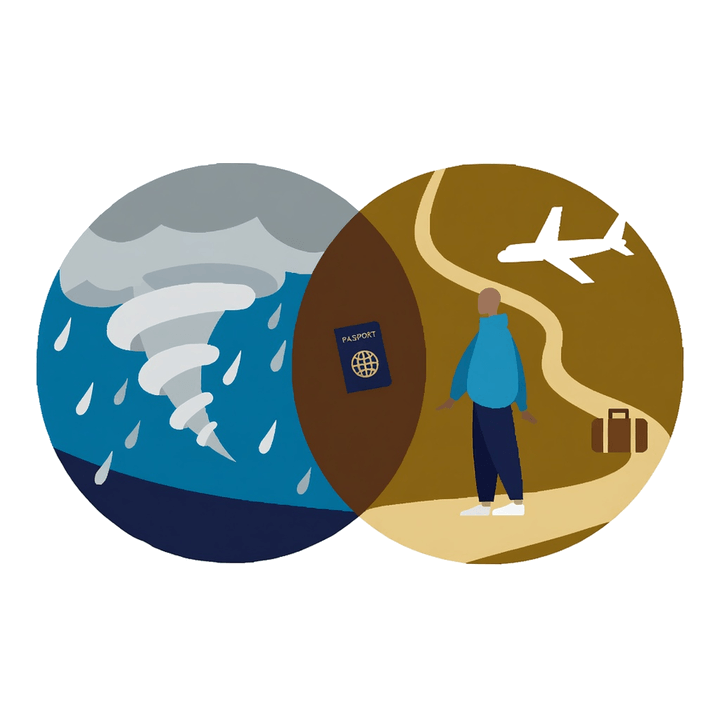
For immigrant families the source is usually identifiable: war, political violence, displacement, poverty, racism in the country left behind or the one arrived in, or the migration itself. What makes it transmissible is rarely the event alone, but the absence of any time, safety, or permission to process it. A parent who fled conflict and started work the following month didn’t get to grieve, and the ungrieved thing doesn’t evaporate. It shapes how they parent, how they handle stress, and what the family treats as speakable.
The concept has been developed most carefully by researchers working with communities that lived it. Maria Yellow Horse Brave Heart’s work on historical trauma among Native American communities gave the field its language for collective, cumulative wounding across generations. Joy DeGruy’s work on the legacy of chattel slavery in Black American families describes the same mechanism running through a different history.
Some injuries are too large and too sustained to stay inside one lifetime.
How generational trauma transmits
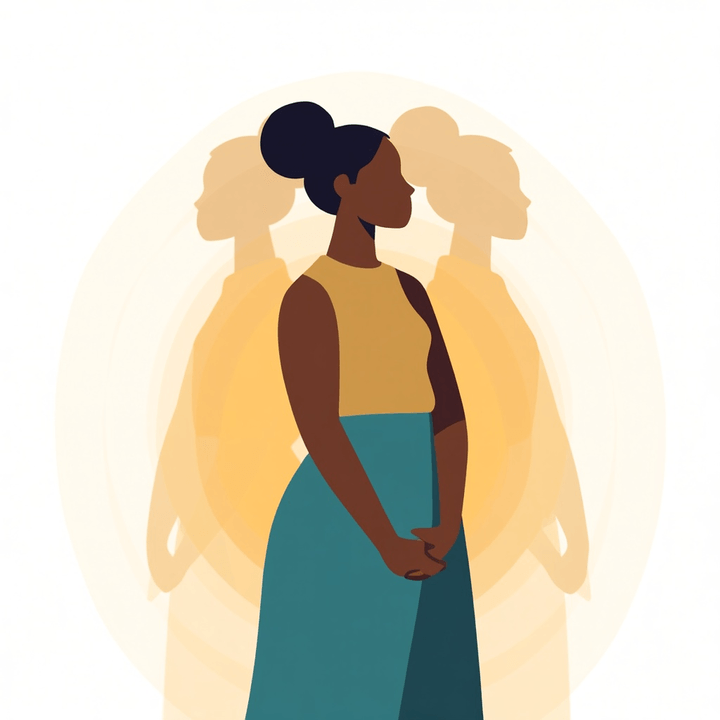
There’s a persistent idea that this passes down mysteriously. Most of it moves through four very ordinary channels.
Behavior you watched
Children learn what danger looks like by watching which situations make an adult tense. If money, authority, or a knock at the door reliably produced alarm, your body filed that as accurate long before you could evaluate it.
Attachment patterns
How a parent responds to a distressed child shapes what that child expects from closeness. Attachment research, including van IJzendoorn's meta-analysis of the field, has repeatedly found these patterns transmitting from one generation to the next.
Silence
What a family can't discuss becomes the shape of the room. Children fill unexplained tension with their own explanations, and the explanation a child reaches for is almost always that they're somehow the cause.
Survival rules
Never show weakness. Trust no one outside the family. Work until it hurts. Don't embarrass us. These were rational under the conditions that produced them, and they get handed down as though the conditions never changed.
Biology may add another layer. Rachel Yehuda’s research at Mount Sinai found differences in stress-hormone regulation among the adult children of Holocaust survivors, and the question of epigenetic transmission in humans is still genuinely contested among researchers. I mention it because people ask, and because the four channels above are established, changeable, and quite enough to explain what you’re living with.
Signs of generational trauma in you
Each of these reads as a personality trait on its own. It’s the cluster that gives it away.
| The rule you inherited | What it looks like now |
|---|---|
| Stay alert, always | Scanning rooms and faces for a threat that isn’t there |
| Rest is dangerous | Guilt within an hour of stopping, or an inability to stop at all |
| Don’t need anything | Asking for help feels humiliating, so you do it alone |
| Feelings are a luxury | Distress arrives as a headache, a stomach, or a stiff back |
| Failure is catastrophic | Ordinary mistakes trigger a response far larger than the mistake |
| The family comes first, always | Obligation reliably overrides your own limits |
| Don’t discuss it | Difficulty naming what you feel, even privately |

There’s a version of this the ACE research made visible. The CDC and Kaiser Permanente study led by Vincent Felitti in the 1990s, which surveyed more than 17,000 adults, established how strongly adverse experiences in childhood predict adult physical and mental health outcomes. Households running on unprocessed trauma tend to generate more of those experiences, which is one concrete route by which one generation’s history becomes the next generation’s health.
What breaking the cycle requires
Name that it exists. The first step is the hardest because it feels like betrayal. Naming what happened in your family isn’t an accusation against your parents. It’s the act of seeing that the weight you carry has an origin outside you, which is the only position from which it can be put down.
Learn the actual history. Not to build a case. Context changes what a pattern means. A father who could not tolerate closeness stops being a verdict on your worth once you know what he watched at nineteen. This is often the step that produces the biggest single shift, and it can be taken without any conversation at all, through relatives, records, or the history of the place your family left.
Separate inherited responses from chosen ones. Take a specific reaction, your response to conflict, to authority, to someone needing something from you, and ask where you first saw it. You can’t change a pattern you can’t see. Once you can see one, it stops being fate and becomes a decision point.
The steps are simple to describe and slow to live.
Feel what your family had to postpone. Many immigrant families survived by not stopping to feel, because stopping was neither safe nor affordable. That was rational then and expensive now. Part of this work is giving yourself permission to grieve, to be angry, to want things, in a setting where doing so finally costs nothing.
Practice the different response. Insight alone doesn’t change a nervous system. The change happens in the hundred small moments where you notice the old reaction arriving and choose the other thing, badly at first, until the new response becomes the automatic one. This is unglamorous and it’s where the actual repair lives.
Why it’s harder when the old patterns worked
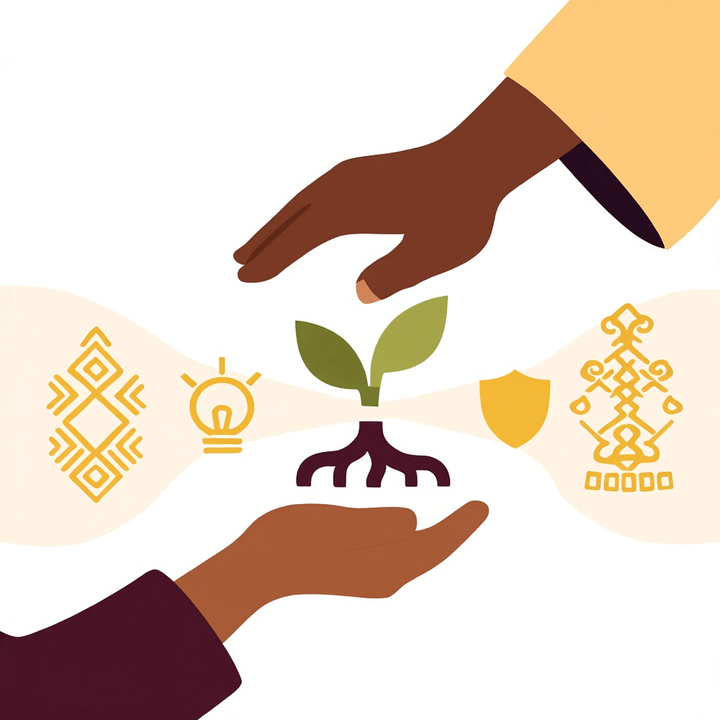
This inheritance is harder to set down than most, and the reason is worth understanding before you try.
Your parents’ adaptations weren’t malfunctions. The hypervigilance kept somebody alive. The relentless work paid for the flight, the rent, the fees, the shoes. The refusal to show weakness kept a family from being seen as a target. These strategies had a job and they did it, and that’s precisely why setting them down feels less like healing and more like disloyalty.
I was born in Jamaica, so I know how thoroughly this is woven into the culture of a family that migrated. A first conversation often runs the same way: an hour of fluent detail about a parent’s hardship, and almost nothing about the speaker’s own week. Learning to take your own experience seriously, in a family where that was never modeled, is a large part of the work, not a preliminary to it.
The specific weight in immigrant families
Migration adds pressures that make this inheritance both more likely and heavier to carry.
Immigrant trauma is rarely one event with a date on it.
Migration stacks them, and each layer keeps working long after the move is over. There’s the displacement itself, the feeling of belonging fully to neither the place you left nor the place you live. There’s racism and marginalization in the new country, an ongoing wound layered over whatever came before. There’s financial precarity, which is itself a driver of psychological distress. There is language, and the isolation of not being able to say what you mean. And there’s grief that never got a ceremony, for people and places left behind, which is why it so often stays unfinished.
Then there’s the sacrifice narrative, which is the one I would name above all the others. “We did this for you” is usually true. It is also, delivered often enough, a debt with no repayment schedule. Children raised inside it learn that their preferences are expensive, that their achievements belong to the family ledger, and that choosing a life the parents didn’t plan is a form of theft. That’s how obligation ends up outranking a person’s own needs for forty years.
Honoring what your parents survived and living the life they came here for are the same act, not competing ones.
If your family’s story includes an active immigration matter, that carries its own weight alongside the inherited kind, and psychological evaluations for immigration cases are a distinct piece of work from therapy. Where the inheritance is Caribbean specifically, the piece on Jamaican resilience and mental health looks at where that famous strength genuinely serves us and where it quietly costs us.
What breaking the cycle isn’t
It isn’t blaming your parents. Most did what they could with what they survived, and holding their limitations and their love in the same hand is the maturity this work asks for.
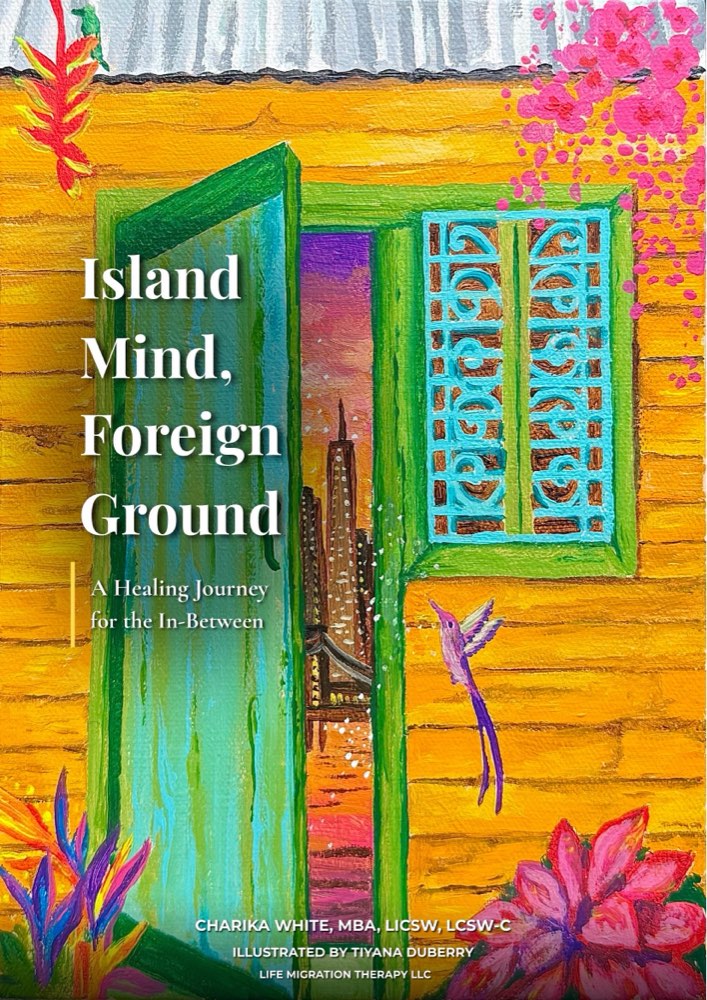
It isn’t cutting off your culture. The aim is to keep the wisdom, the food, the language, the belonging, and set down the pain that traveled alongside them. Care that treats your background as context instead of a complication is the point, which the piece on decolonizing therapy explores in depth. If you want to sit with this material on your own first, I wrote a reflective workbook for the Caribbean diaspora, Island Mind, Foreign Ground, that gives it somewhere to go.
And it isn’t quick. Generations accumulated this. What shifts early is the feeling of being trapped by it, which is worth a great deal on its own.
You’re the one who got to stop and look
Every pattern you interrupt is one the people after you won’t have to inherit. That’s what breaking the cycle means in practice: not erasing what happened, but ending its transmission.
This is individual work, and it doesn’t require anyone else in your family to participate or agree. I work with adults across Washington DC and Maryland by secure telehealth, and the holistic mental health support page covers how I approach this kind of history. If you’re in Maryland, the African American therapist in Maryland page is the closer fit, and the individual therapy page for Maryland explains how sessions run.
The first conversation is free and lasts fifteen minutes. You’re allowed to come with nothing more prepared than a feeling that something in your family didn’t start with you.